

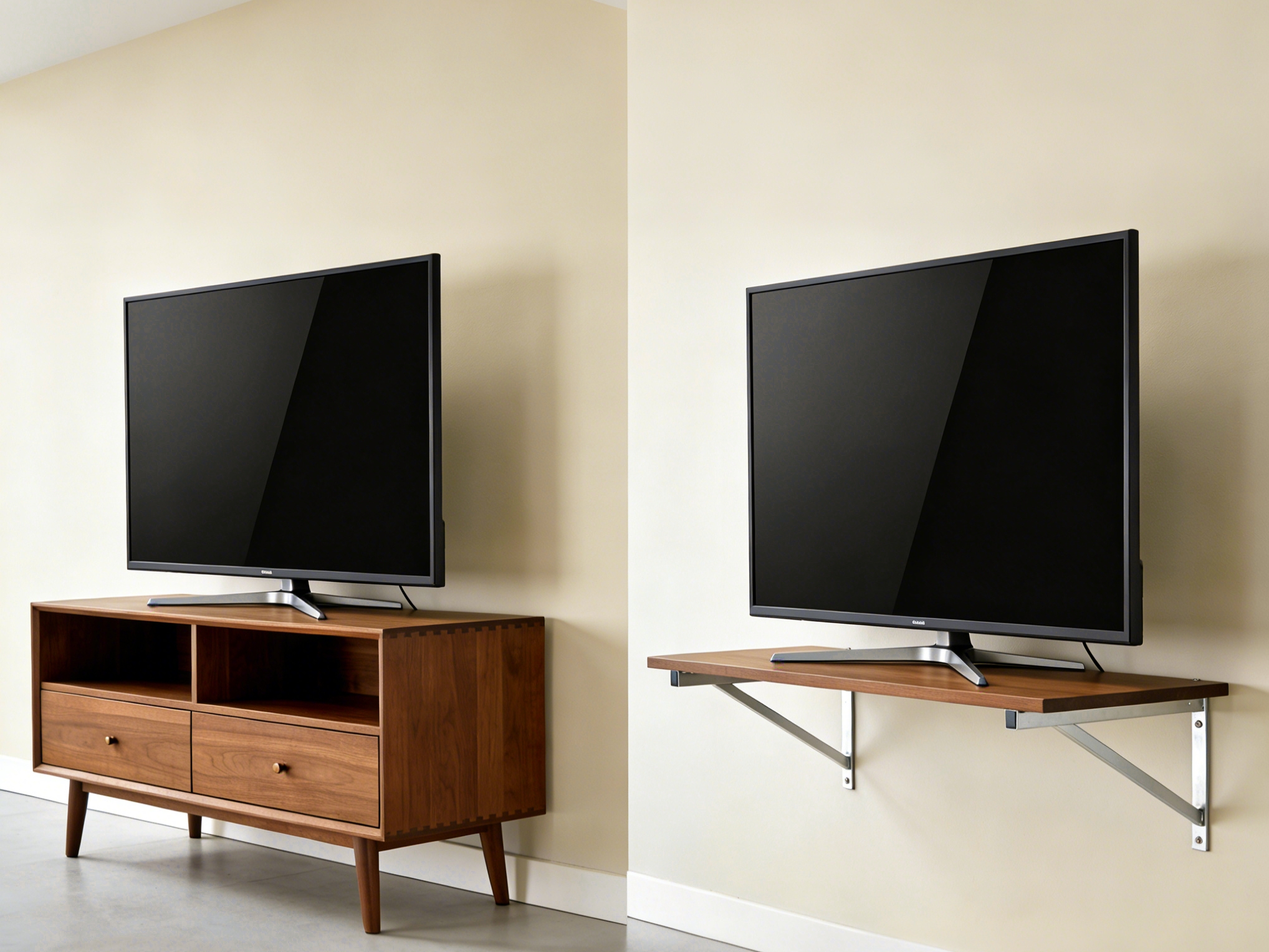
TV Stand vs. Floating TV Stand: Which Is the Better Choice for You?
Choosing the right TV stand can transform not only your entertainment setup but also your living space as a whole. With the growing popularity of minimalist designs and technology in homes, the traditional TV stand and the floating TV stand are two of the most sought-after options. But which one is best suited for your needs and style? In this blog, we’ll dive deep into their features, pros, cons, and guide you toward the most suitable choice for your home.
What Is a Traditional TV Stand?
A traditional TV stand is a freestanding piece of furniture designed to support your television and store related devices, media, and accessories. Usually made from wood, metal, or composite materials, these stands range from simple open shelves to elaborate cabinets with doors and drawers.
Pros:
- Easy to move and reposition within the room.
- Offers extensive storage for consoles, DVDs, books, and décor.
- Provides cable management solutions with built-in grommets.
- No installation required; simply place it in your desired location.
Cons:
- Takes up valuable floor space, which can be limiting in smaller rooms.
- May appear bulky or outdated in modern settings.
Traditional TV stands suit homes that need flexible furniture arrangements and ample storage.
What Is a Floating TV Stand?
A floating TV stand, as the name suggests, mounts directly onto the wall, creating the impression that it’s “hovering” above the floor. These stands are usually designed with sleek lines and minimalist aesthetics, made from sturdy materials like wood, MDF, or metal to safely support your TV and accessories.
Pros:
- Frees up floor space, making rooms appear larger and less cluttered.
- Contemporary look that enhances modern décor.
- Elevates cable management, hiding wires within the wall or behind panels.
Cons:
- Requires wall installation, which can be challenging for renters or those without solid walls.
- Limited storage compared to traditional stands.
- Not suitable for very large TVs or uneven wall surfaces.
Floating TV stands are ideal for homeowners seeking a clean, spacious, and stylish entertainment area.
Factors to Consider When Choosing Between a TV Stand and Floating TV Stand
Before making a decision, consider these important factors:
Room Size and Layout
- Traditional TV stands work well in medium to large rooms where floor space is not a concern. In smaller spaces, a floating TV stand can maximize available area and improve traffic flow.
- Take into account wall real estate and floor space when planning your entertainment setup.
Storage and Organization Needs
- Traditional stands are perfect for those who need to store gaming consoles, set-top boxes, books, and other media.
- Floating stands typically have fewer compartments but offer cable management and a low-profile storage solution.
Style and Aesthetics
- If your home features classic or eclectic décor, a traditional TV stand can complement these styles.
- Floating TV stands are the go-to for modern, minimalist interiors, creating a seamless and sophisticated focal point.
Installation and Maintenance
- Traditional TV stands require no installation and can be easily moved for cleaning.
- Floating TV stands often need professional installation and careful wall mounting but are easier to clean underneath due to their elevated design.
Safety and Stability
- Traditional stands offer stable support and are great for families with children or pets.
- Floating stands must be securely mounted especially for larger TVs, and may not be recommended for households with active kids.
TV Stand vs. Floating TV Stand: Comparison Table
| Feature | Traditional TV Stand | Floating TV Stand |
|---|---|---|
| Floor Space Usage | High | Low |
| Storage Capacity | High | Moderate |
| Installation Required | No | Yes |
| Style Impact | Versatile | Modern / Minimalist |
| Ease of Cleaning | Moderate | Easy underneath |
| Safety for Children / Pets | High | Moderate |
Use Cases and Recommendations
The right choice of TV stand depends largely on your needs, preferences, and room constraints. For families who require ample storage and frequently rearrange their space, a traditional TV stand offers flexibility and convenience. If you live in a modern apartment or want a minimalist look, the floating TV stand is an excellent way to open up your living area and highlight your TV as a sleek centerpiece.
Expert designers often recommend floating TV stands for smaller rooms and open-concept layouts. Conversely, people with larger living rooms or a need for multifunctional furniture typically prefer traditional TV stands.
Conclusion
Both traditional TV stands and floating TV stands serve important roles in enhancing the entertainment experience at home. Understanding your priorities—space, storage, style, installation, and safety—will make your decision easier. Whether you value flexibility and storage or crave a modern, airy ambience, your ideal TV stand awaits. Upgrade your home’s look and functionality by choosing wisely!


